
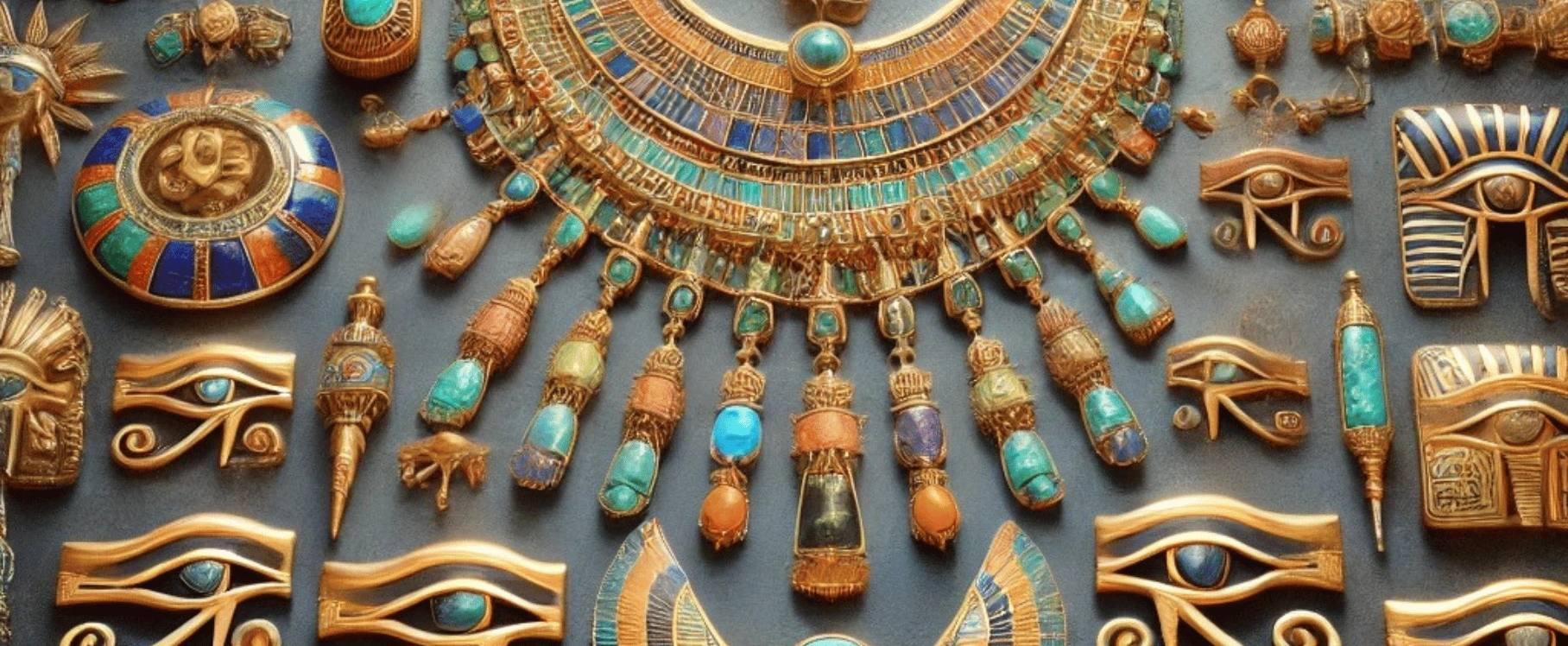
The Timeless Beauty of Ancient Egyptian Jewelry
Ancient Egyptian jewelry deeply spiritual expression of culture and divinity. Spanning from 3000 BCE to 30 BCE, these magnificent pieces symbolized life, protection, and power, reflecting the exceptional artistry of Egyptian craftsmen. The metal Gold, central to ancient Egyptian jewelry, represented immortality and was believed to be the flesh of the gods, especially Ra, the sun god. Its brilliant shine was thought to embody divine light and eternal life. This precious metal was frequently combined with silver, copper, and electrum—an alloy representing the balance between the sun and moon—signifying harmony within the cosmos.
Both the elite and commoners including farmers and artisans, wore jewelry made from more modest materials such as copper, faience, and simple stones. The rich adorned themselves with meaningful pieces that guided them through life and the afterlife. For pharaohs, these were more than treasures; they were symbols of divine favor. Pharaohs, draped in gold and adorned with gemstones, were seen as living gods, their jewelry emphasizing their sacred bond with the divine. Tutankhamun’s ‘menat’ necklace, with its multicolored rows of beads and ornate pendant, was an example of the grand, elaborate pieces worn by royalty, imbued with spiritual meaning. While the commoners wore pieces made of less valuable material, but were equally sacred, connecting the wearer to divine forces.
Egyptian craftsmen were true masters, utilizing advanced techniques like filigree, granulation, and inlay to create intricate designs that carried profound meanings. Stones were chosen for their spiritual significance: turquoise represented fertility and blessings; lapis lazuli, with its deep blue hue, symbolized a connection to the heavens; and carnelian, with its fiery red, offered protection and strength. Even glass and faience imitated these precious stones, maintaining the same symbolic importance regardless of the material.
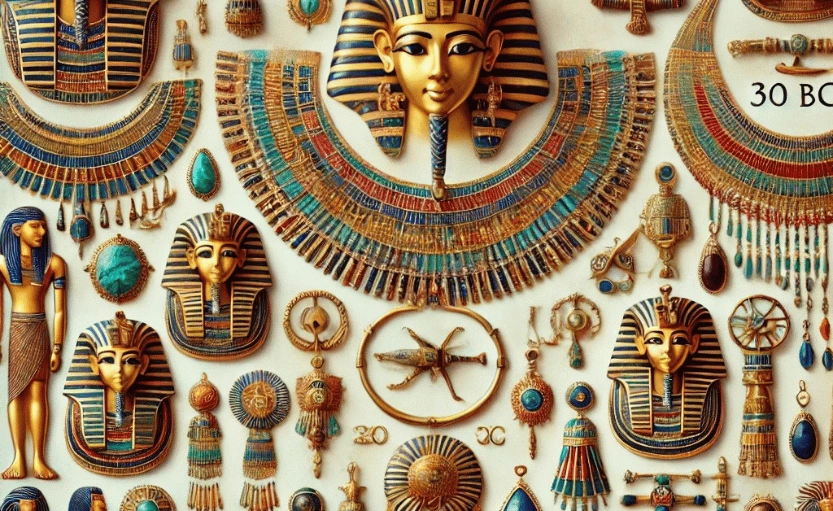
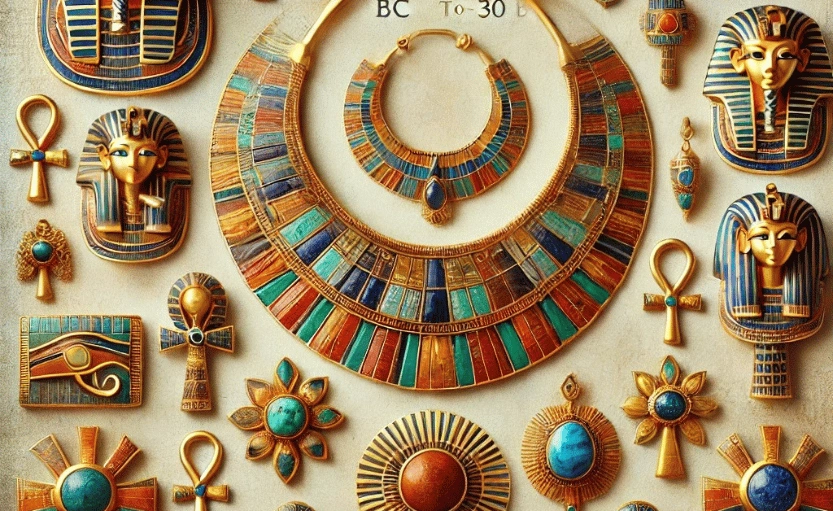
The broad collar necklace, a popular piece worn by both men and women, was believed to offer divine protection. Every bead and gemstone was thought to carry blessings, creating a shield of spiritual defense for the wearer. Amulets, infused with sacred power, played a crucial role in Egyptian life. The scarab amulet symbolized rebirth and renewal; the Eye of Horus protected from evil; and the ankh represented eternal life, serving as a reminder of the cycle of life and death. Worn close to the heart, these amulets accompanied individuals through life and into the afterlife, offering guidance for the soul’s journey. Jewelry’s importance extended beyond life into the afterlife. Egyptians believed death was the beginning of a new journey, and tombs were filled with jewelry to guide and protect the soul in the afterlife. Rings, bracelets, necklaces, and amulets weren’t just treasures but essential tools for navigating the divine realm. Pharaohs, such as Tutankhamun, were buried with elaborate jewelry, including a solid gold coffin and countless jewels, ensuring their spirits' passage into eternity.
The legacy of ancient Egyptian jewelry continues to resonate today. Iconic symbols like the scarab, Eye of Horus, and ankh are still worn, representing timeless connections to ancient beliefs. The stunning craftsmanship, vibrant materials, and balance between life and death that characterized ancient Egyptian designs continue to inspire modern jewelry makers.Ultimately, ancient Egyptian jewelry was more than an accessory—it was a reflection of the soul. Each piece was a connection between the physical and divine worlds, telling a story of life, death, and the everlasting journey of the spirit.