
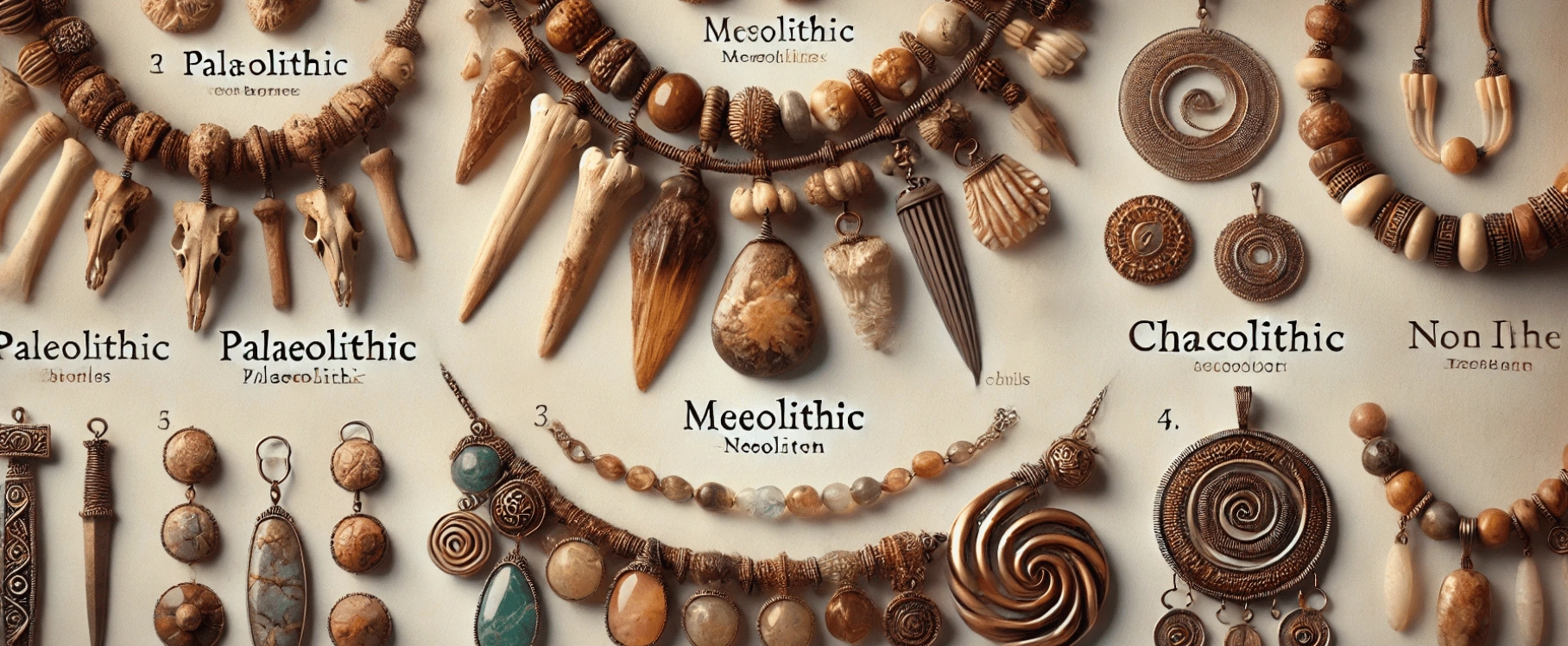
The Prehistoric Evolution of Jewelry: A Timeless Legacy
The Prehistoric Era, spanning back to roughly 2.5 million years ago and concluding around 3000 BCE, represents a fascinating chapter in human history. Divided into five distinct periods—Palaeolithic, Mesolithic, Neolithic, Chalcolithic, and the Iron Age—this was a time when humans had not yet mastered writing but were already expressing themselves through incredible and intricate jewelry creations.
In these early societies, jewelry was far more than mere adornment. The Prehistoric peoples crafted their pieces from materials found in nature—shells, bones, teeth, antlers, claws, stones, and, later in the Neolithic period, copper. These creations were imbued with significance beyond their beauty. Jewelry represented social status, religious beliefs, spiritual symbolism, and personal milestones. It even played a role in the afterlife, as in some cultures, jewelry was buried with the dead to accompany them on their journey beyond.
Some of the earliest examples of prehistoric jewelry have been uncovered at Blombos Cave in South Africa, where archaeologists discovered shell beads, likely worn as necklaces or bracelets. Similarly, ostrich eggshell beads have been found across parts of Africa. Amber, cherished for its warm tones and believed to possess protective powers, was often fashioned into talismans and amulets. The precision with which early humans drilled holes into beads and pendants—without the advanced tools we now have—demonstrates their incredible craftsmanship and ingenuity.
By the end of the Neolithic period, jewelry-making had advanced significantly, with the use of copper becoming widespread. This era of innovation marked the beginning of more sophisticated techniques and materials, laying the foundation for the opulent and symbolic pieces we treasure today. The evolution of jewelry throughout these early periods not only showcases humanity's creativity but also reflects our desire for self-expression and cultural identity.